
"Brazilian coffee decline"
500 article(s) found

Kenya coffee production introduction three beans guest coffee roaster
Kenya borders Ethiopia to the north, where the Arabica coffee tree originated, but coffee cultivation did not begin until the early 20th century. Missionaries introduced Arabica trees from Yemen in the 19th century, but they did not plant them in large quantities until 1893, when they introduced the ancient seeds of Bourbon coffee from Brazil. Coffee in Kenya is of Brazilian descent.

Brazilian Coffee Coffee from Hillado, Brazil, Mojiana, Brazil, Santos, Brazil
Communication of professional baristas Please follow the coffee workshop (Wechat official account cafe_style) Brazil Coffee mentions the origin of coffee, the first thing that comes to mind is Brazil in South America, because it is the largest coffee producer in the world. There is a wide variety of Brazilian coffee, the vast majority of which are unwashed and sun-dried, classified according to the name of the state of origin and the port of transport. Brazil has 2.

The world's largest major producing area of Brazilian coffee in Central and South America
Brazil's growth in the coffee industry may be due to the regular coffee competition held in Brazil, usually hosted by the Italian Federation of espresso roasters and the International Cup of Coffee judges. These competitions not only attract people's attention to Brazilian high-quality coffee, but also drive the market price of Brazil's top coffee. Although coffee is diverse, Brazilian coffee

New York Futures: Arabica coffee futures fall to a July low as Brazilian production forecasts are raised
New YORK / London (Reuters)-ICE Arabica coffee futures fell more than 3% on Wednesday to their lowest level in about five months as Volcafe expected Brazilian coffee production to rise next year, while raw sugar rebounded to a two-and-a-half-month low. Cocoa futures rose for the fourth day in a row. Arabica coffee futures fell after Volcafe said in a report that Brazil was recharged in November.

Coffee bean trading LIFFE3 monthly coffee futures suffered a setback
ICE raw sugar futures fell to a two-and-a-half-week low on Friday as investors further expected that excess inventories would not be digested as quickly as previously thought. Arabica coffee futures rose today, but fell for the fifth month in a row. Cocoa changed from a decline to a rise due to technical buying after falling to an one-year low. March raw sugar futures closed down 0.06 cents, or 0.4%, at 14.79 cents per pound.
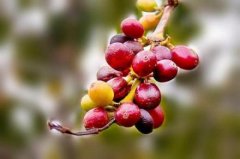
Brazilian coffee beans are also the main raw materials of instant coffee.
Brazilian coffee beans include all coffee beans grown in Brazil. Except for Sanduo, Brazilian beans are mostly cheap and good coffee. Can be used for mass production of comprehensive coffee beans, most of which are re-roasted. The main raw material of instant coffee is also Brazilian coffee beans. When the coffee bean germ is very fresh, it is artificially refined and naturally dried in the vulva for about 60-70 days to make the fruit

Introduction to the varieties of Brazilian Coffee Bean Flavor description and Taste treatment method
The Flavor description of Brazilian Coffee Bean production Variety introduction the great economic crisis in 1929 sharply reduced the world consumption of coffee, which dealt a heavy blow to the Brazilian coffee plantation economy. Since then, the proportion of Brazilian coffee production in export earnings has plummeted. Over the past 30 years, with the development of modern Brazilian industry, especially steel, shipbuilding, automobile, aircraft manufacturing, etc.

Kenya Coffee Bean Flavor Kenya Coffee Bean Origin Fine Coffee
Kenya borders Ethiopia to the north, where the Arabica coffee tree originated, but coffee cultivation did not begin until the early 20th century. Missionaries introduced Arabica trees from Yemen in the 19th century, but they did not plant them in large quantities until 1893, when they introduced the ancient seeds of Bourbon coffee from Brazil. Coffee in Kenya is of Brazilian descent.

Kenya Coffee-introduce how to debug the coffee grinder
Kenya is bordered to the north by Ethiopia, the origin of Arabica coffee trees, but it was not until the beginning of the 20th century that coffee cultivation began. In the 19th century, missionaries introduced Arabica trees from the leaves, but did not plant them in large quantities. It was not until 1893 that coffee was cultivated on a large scale because of the introduction of Brazil's ancient bourbon seeds. That is to say, Kenyan coffee is of Brazilian origin, because of water.

Introduction to the flavor of Kenyan coffee
Kenya is bordered to the north by Ethiopia, the origin of Arabica coffee trees, but it was not until the beginning of the 20th century that coffee cultivation began. In the 19th century, missionaries introduced Arabica trees from the leaves, but did not plant them in large quantities. It was not until 1893 that coffee was cultivated on a large scale because of the introduction of Brazil's ancient bourbon seeds. That is to say, Kenyan coffee is of Brazilian origin, because of water.

Brazilian Arabica Coffee Bean Production Fine Coffee Bean Definition and Standard Difference from Commercial Coffee
Coffee is an important crop for Brazilian agribusiness. There is evidence that the geographical distribution of coffee production throughout Brazil and the varieties produced have changed over time. Furthermore, these developments appear to be linked to structural changes resulting from reduced government intervention and its impact on coffee market prices, which have created new coffee production dynamics in the country. Against this background,
ICE raw sugar pulls back from a brief rally led by Brazilian data
ICE raw sugar futures were little changed on Tuesday, with Brazilian sugarcane crushing data showing a decline in harvests, causing raw sugar to rise briefly before closing slightly lower. Arabica coffee futures rose slightly.

Introduction of coffee beans and coffee trees in Kenya
Kenya is bordered to the north by Ethiopia, the origin of Arabica coffee trees, but it was not until the beginning of the 20th century that coffee cultivation began. In the 19th century, missionaries introduced Arabica trees from the leaves, but did not plant them in large quantities. It was not until 1893 that coffee was cultivated on a large scale because of the introduction of Brazil's ancient bourbon seeds. That is to say, Kenyan coffee is of Brazilian origin, because of water.

Introduction to the characteristics of Grinding degree by conditional Flavor description treatment in Brazilian Coffee Bean planting area
The introduction of Brazilian coffee beans includes all coffee beans grown in Brazil. Except for Sanduo, Brazilian beans are mostly cheap and good coffee. Can be used for mass production of comprehensive coffee beans, most of which are re-roasted. The main raw material of instant coffee is also Brazilian coffee beans. When the coffee bean germ is very fresh, it is artificially refined and naturally dried in the vulva for about 60-70 days to make the flesh sweet.

Coffee bean production drops sharply, China becomes a new source of Starbucks, Brazilian coffee beans Starbucks
It is reported that coffee production has plummeted due to weather and disease in Brazil, a coffee-producing country. Starbucks, the world's largest coffee chain, has turned its attention to China.

How about Shirado Coffee? Brazilian Sheraton Coffee characteristics the flavor of Brazilian Syrador coffee
Professional coffee knowledge exchange more coffee bean information please pay attention to the coffee workshop (Wechat official account cafe_style) Central and South America is the world's largest coffee producing area, the amount of output here obviously affects the global price of raw coffee, among which Brazilian coffee is the largest producing country in Central and South America and the largest coffee production country. Brazilian coffee can account for up to 30% of global production.
Brazilian Coffee, the Kingdom of Fine Coffee in the World
Brazil is famous all over the world for its high quality and strong taste of coffee. It is the largest coffee producer and exporter in the world and is known as the coffee kingdom. Coffee originated in Ethiopia in Africa and was introduced into Brazil in 1727. Brazil is located in the southeast of South America, located in the tropics and subtropics, the unique geographical and climatic conditions are suitable for growing coffee, coupled with cheap labor, coffee growing industry is booming.

General knowledge of Fine Coffee beans Diversified ways of handling Brazilian Coffee
Brazilian coffee farms choose sun, half-sun or water washing treatments according to the dry and humidity conditions of the climate to show the best regional flavor. Such a pluralistic approach is rare in the world. Before 1999 ⊙, rough tanning was almost always used in Brazil. This is the main culprit for Brazilian beans to be easily infected with the smell of dirt and rotten wood, because coffee fruits are exposed to the sun for two to three weeks.

What does Brazilian coffee mean? What are the flavor characteristics of Brazilian coffee? Is the Brazilian coffee good?
Professional coffee knowledge exchange more coffee bean information please follow the coffee workshop (Wechat official account cafe_style) Brazilian coffee refers to coffee produced in Brazil. There is a wide variety of Brazilian coffee, the vast majority of which are unwashed and sun-dried, classified according to the name of the state of origin and the port of transport. Brazil has 27 states and 17 states produce coffee, but 4 of them produce coffee.
The Kingdom of Fine Coffee Brazilian Coffee
Brazil is famous for its coffee quality and strong taste. It is the largest coffee producer and exporter in the world. It is known as the coffee kingdom. Coffee originated in Ethiopia and was introduced to Brazil in 1727. Brazil is located in the southeast of South America, located in the tropics and subtropics, unique geographical and climatic conditions are very suitable for coffee cultivation, coupled with cheap labor, coffee cultivation industry rapidly emerged.